Basket

Supporting
Beginning Teachers
to Navigate Emotional Demands
Faculty of Education, University of Cambridge

Reflections from Jane:
Understanding and adopting The Chimp Model is life-changing and transformative. You feel more empowered because it gives you the tools to take effective actions which result in more constructive behaviours. It enables you to become more accepting of yourself, acknowledging and appreciating personal strengths (rather than being defined by negative traits).”
Jane Warwick,
Associate Professor Primary PGCE Course Manager, Faculty of Education, University of Cambridge
About the Faculty of Education
The Faculty of Education at the University of Cambridge prepares future teachers through its Primary and Secondary PGCE programme — an intensive one-year Initial Teacher Education (ITE) course designed to support student teachers as they move from academic study into the professional responsibilities of classroom teaching.
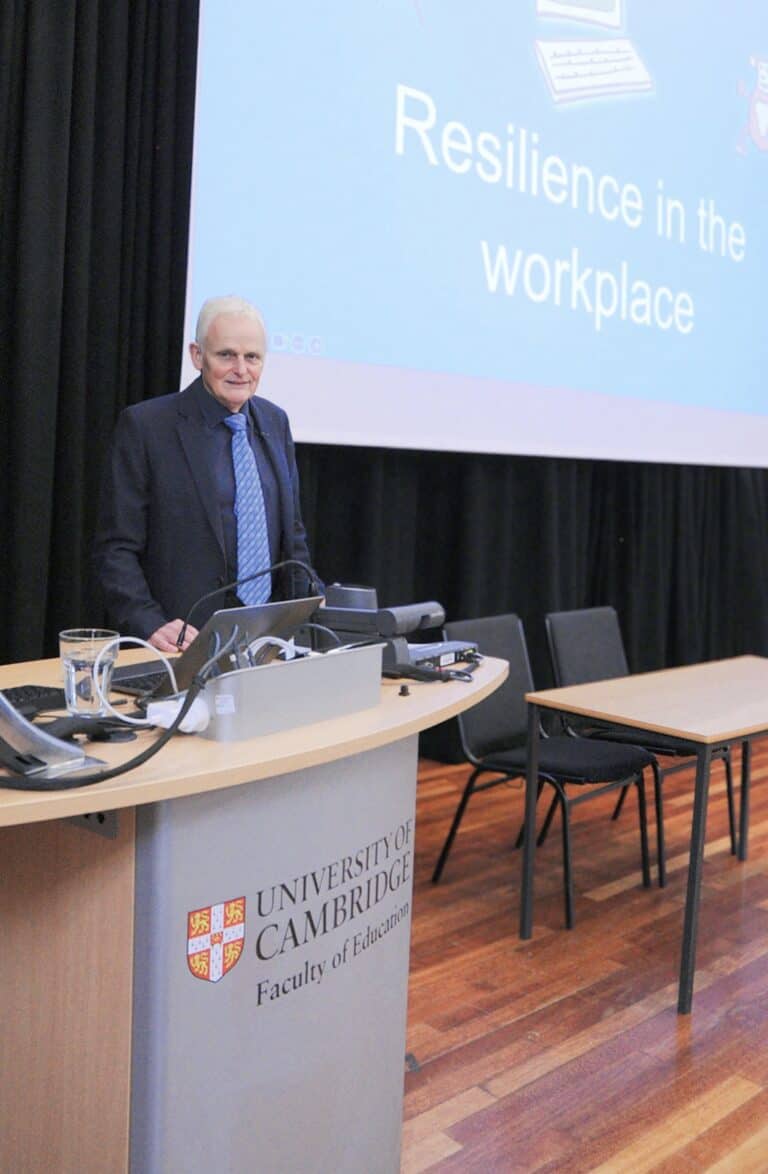
Jane Warwick works on the Primary PGCE supporting beginning teachers for over 15 years. Previously Course Manager, responsible for all elements of the programme, she now works part-time with a dedicated focus on Student Wellbeing and Partnership — liaising closely with school partners and organising student teachers’ school placements.
Her role places her at the centre of both academic and pastoral support, providing continuity and guidance during a significant professional transition.
The Challenge
Through her work in Initial Teacher Education, Jane has become increasingly aware of the emotional challenges faced by beginning teachers.
The transition into the professional workplace requires a shift in identity. Student teachers are required to take on the responsibilities of being a class teacher while still developing confidence in their practice.
Students enrolled on the course are highly capable and therefore academically successful.
Many, however, hold extremely high expectations of themselves and often demonstrate perfectionist characteristics.
While this can drive achievement, it can also make learning to teach emotionally demanding.
Without the right support, the pressure associated with this change can impact on confidence, resilience, overall wellbeing and in turn, retention rates.
The Approach
Jane was introduced to The Chimp Model after attending a number of Chimp Annual Conferences and further developed her understanding of the model by participating in the Skills for Life course for teachers in 2020.
She found the framework highly effective in helping student teachers understand how their minds work and manage their emotions — enabling them to complete the PGCE course successfully and qualify as teachers
She has since introduced The Model to colleagues on the Primary PGCE course and experienced teachers in the Faculty’s Partnership schools.
Several aspects of The Model have stood out:
- It provides fascinating insights into human behaviour that improve wellbeing and develop resilience.
- It is an acceptance model, helping people understand neuroscience in a way that enables them to be more accepting of themselves.
- It offers straightforward, practical strategies that can be applied immediately.
- It creates a common language for discussing emotions, leading to greater acceptance and confidence.
The Impact
Student teachers engaging with The Model report feeling more in control of their emotions and better equipped to manage the academic and professional demands of the course. Including supporting the children and their needs and dealing with colleagues and parents in a calm way.
As a team, staff are now more able to recognise when the students are struggling emotionally and can offer structured guidance to help them develop professionalism and resilience.
Jane reflects that there are students who may not have successfully passed the course —or remained in teaching — had they not been introduced to The Chimp Model.
On a personal level, she describes feeling more effective in her leadership role and more in control of her own emotions, becoming a better colleague by addressing less helpful traits and behaviours.